From doing magic tricks with bosses to sending desserts to employees’ homes, companies are adding real-life elements to online events to keep both morale and productivity up.
Early in May, Amit Somani was looking for an online event for his company’s annual founder’s day. For years, as managing partner at Prime Ventures, a venture capital firm, Somani had hosted a get-together in a five-star hotel in Bengaluru, flying in founders of startups that his company had funded. This year, with the pandemic wreaking havoc, that was not an option.
“The only option was yet another online conference. But I felt the social element was sorely missing and wanted the online event to be innovative and participatory,” he says. Somani posted a tweet, asking people, especially entertainers, if there was a way to conduct an online event that was better than just meeting everyone on screen.
Stage performer and illusionist Nakul Shenoy saw the tweet and messaged him. Since March, Shenoy, who had been fine tuning stage performances to suit screens, had just the right event in mind—a show that had elements of team interaction and participation. Somani hired him.
A screengrab of Nakul Shenoy performing his the Box of Mystery experience.
Company leaders realize that social engagement is an important element to network and keep productivity levels up, an association often emphasized by workplace experts and research papers. While many offices have reopened, they remain operations-only, leaving no space for social engagement. For those still working from home, absence of get-togethers and travel has made work repetitive, and the online activities organized by the HR that were once fun have now become boring and dull.
Though it’s still not possible to have events in real spaces, companies are hosting “hybrid” social events that combine online and offline experiences to engage their employees and stakeholders.
From making food together, to drawing or singing, to quizzes, and health challenges on fitness apps to sending desserts to employees’ homes for an evening get-together—hybrid interactions add a physical element to an online-only event.
A DASH OF REAL LIFE
For Somani and his 50 co-workers, Shenoy designed a hybrid event, called Box of Mystery, which involved sending a surprise box to each of the participant’s homes. The box could be opened only on the day of the event for a shared experience; even Somani was forbidden from knowing what was in the box.
The sense of mystery built through the week as the little black boxes reached people’s homes. Founders were excited. Prime’s casual WhatsApp group was flooded with conversations. At on D-day, when everyone logged into the Zoom link that Shenoy had sent, they all opened their boxes together. “Throughout the event, we conducted our own tricks, like we were all magicians,” says Ankit Gupta, 32, chief executive of online game engagement startup, Quizizz.
A couple of screengrabs of the attendees enjoying the Box of Mystery experience presented by Nakul Shenoy.
Long after it was over, the event and the innovative way it had been conducted stayed with Gupta, giving him ideas for his own startup. “It made me think how the pandemic has forced us to be innovative in new ways and figure out new ways for remote engagement,” he says.
When people go to an office, everything from a birthday party to a social coffee is an exciting experience as people talk to each other and get a break from their computer screens.
Bringing the same levels of enthusiasm in an online-only event can be a challenge, says Sayan Chatterjee, the human resource director of Beam Suntory India, a premium spirits company.
“There’s no grapevine conversation, we don’t know how conducive the home environment is for the attendee and what and of challenges they would face attending the ‘social’ event,” he says. That’s the reason that HR teams have to be extra creative. Since the lockdown, his team has developed various versions of hybrid events—making cocktails together, yoga and meditation classes for employees and their family members, and a fancy dress session for new hires.
Rashi Chugh, who joined as a marketer with Beam Suntory India in May, was one of the 38 people who attended the fancy dress session. She, along with all the others, were asked to dress up in fancy attire using props at home and come as a character. Chugh, a self-confessed Mumbai girl, dressed for the beach, in a floral dress, sunglasses and a fedora, complete with a piña colada.
“It made me remember my childhood days and our fancy dress competitions at school and made the whole experience even all the more personal,” laughs Chugh, 30, based in Gurugram. The problem of never having met her colleagues in real life melted away, as she could engage with them at a more social level and even make friends—all without meeting them.
“It’s a feeling like we are going back to school,” agrees Smruti Alinje Bhalerao, who participated in an online mocktail-making session with 50 co-workers that was organized by Walktails, an event management company. The interaction while doing the activity, like someone asked what’s the right way to cut apples, made the event more memorable.
“Nothing beats being physically present in each other’s company, but with the situation, these kind of events are the next best thing to socialize with co-workers,” she says.
Meeting people in real life is, of course, better, agrees Chugh, “but since we are all dealing with distance, interactive online sessions are a great way to bond and know your peers.”
“There is something very ritualistic about a collective, shared experience with physical objects in play, says Shenoy, who has been doing online shows for companies for a few months and always asks people to use commonly available objects to involve them in the show.
The Mystery Box event was a raving success, with founders like Gupta gushing all over Twitter and WhatsApp about how much fun they had. Though Shenoy designed it as a one-off experience, seeing the response, he has already run it twice for friends and public. “These events are definitely the way forward in the post-corona world,” says Shenoy, though he adds that they have to be well designed to make an impact.
And that isn’t easy. “This is the bleeding edge of live events,” says Somani, who is currently looking for a comedian, who can do a collaborative show for his next conference.
– The article ”The hybrid social network at work‘ has been reproduced from Mint Lounge, Mint & the Wall Street Journal, dt. 21st August 2020.
Get set for an evening of tricks, art and more as three artists are set to blow your mind. At Sand Shadow Sorcery, audience will be treated to three different kinds of art form – sand art, shadow play and magic performed by Raghavendra Hegde, Prahlad Acharya and Nakul Shenoy. The event will be held online on July 12 at 11.30 am and will be a visual treat.
Stunning imagery conjured up with a fistful of sand shadows speaking and coming to life, minds being read and magic through the screen that is what the audiences will experience at this show.
Sand Shadow Sorcery brings together the three most creative and well-known exponents of Sand Art, Shadow Play, and Mystery Entertainment on one single platform — to present a never-before experience online. All three artists are known in their respective fields and have performed across the country and the world. The show is open for people above 6 years.
Prahlad is an internationally renowned magician, ventriloquist, shadow play artist and storyteller. A master magician, he is one of the few entertainers in the world who use only their bare hands to create an unbelievable world of light and shade. Nakul is a mystery entertainer and corporate speaker and is the author of Smart Course in Magic and a 10-time TEDx speaker. Raghavendra takes a handful of sand and conjures up the world with it. He takes his audiences on a journey of their lifetimes, all using a little sand and some light.
In this conversation they discuss science and magic, how magic can be used in persuasion and in business, customer discovery process and connecting with people.
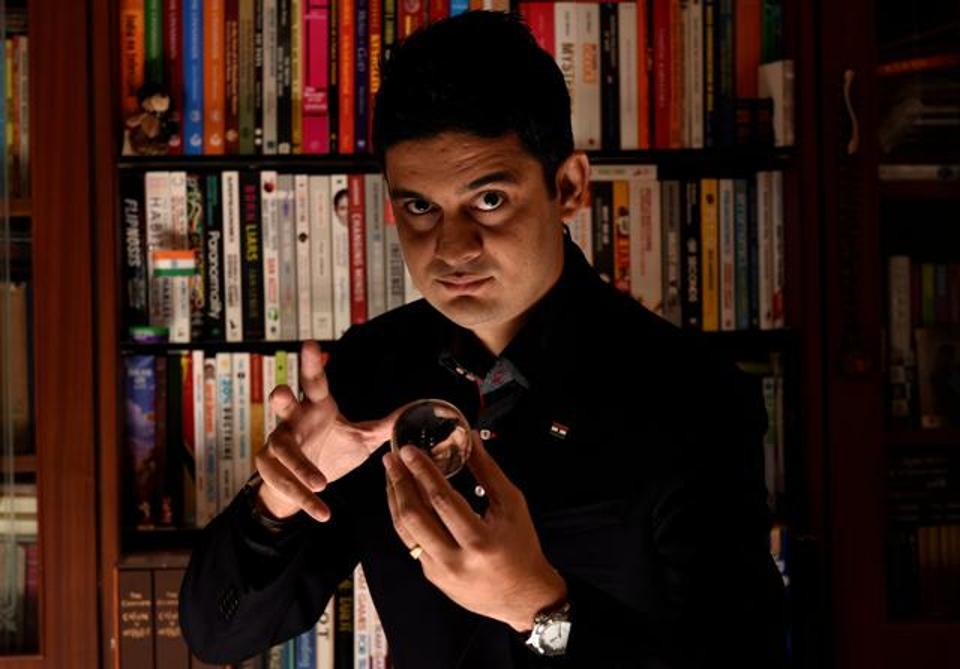
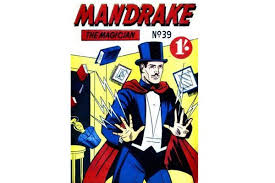
With his imagination kindled at age five by ‘Mandrake The Magician’ comic books, Nakul Shenoy first took stage as a 15-year-old entertaining large gatherings with his magical shows. Two and a half decades later, this expert magician and hypnotist enthrals audiences like few others can, and progresses along in his self-professed dream to be “a real-life Mandrake”.
Welcome to the Prime Venture Partners podcast. Today I’m delighted to have with us Nakul Shenoy, a mind reader, a mystery entertainer, a UX design engineer and a dear friend who also hangs out a lot on Twitter. Welcome to the show, Nakul.
Nakul Shenoy 1:02
Thanks Amit, it’s a pleasure to be here. Thank you so much.
Amit Somani 1:05
Nakul, you recently did a show for us at prime ventures and all of our founders. And it was obviously very, very entertaining, very mysterious, and very wondrous. I had a quote that one of my colleagues Vineet said, at the end of the show, going something like I shouldn’t have a scientific mindset in magic shows, everything is too easy to crack. This was a thought before the show started. And as it ended, he said, science is a lie. They all fooled us for all these years. What do you think about the relationship between science and magic?
Nakul Shenoy 1:41
Science and magic are very deeply intertwined. Magicians have always been one of the people who have taken the newest advances in science, applied it to theatrical performance, and made it completely mystifying not just for their audiences but also for the scientists themselves. So yeah, they’re absolutely totally entwined. One of the primary stories that comes to mind is Robert-Houdin who actually is known as the father of magic, modern art magic, performing and in fact using electromagnets in the Middle East conflict when electromagnets were just about coming out and trying to show this whole thing of my magic is more powerful than your magic kind of thing. It gets into theology, it gets into religion a bit. But yeah, and we continue to do that, as you saw a lot of what I did had connections to modern science and drew from there.
Amit Somani 2:49
So clearly Nakul, when you’re doing magic, you’re not obviously violating science principles. So something else is going on to generate that mystery. What is going on there?
Nakul Shenoy 2:59
The way I like to look at it is magicians or any performers essentially take one science and use it to break another, for example, in a classic magic effect, you may see a magician floats somebody in the air now that is breaking the laws of gravity. But the way we are going to achieve that is by perhaps using laws, other laws of physics, the laws of refraction, or optical illusions and things like that, since I deal with the power of the mind and my shows are more about mystery entertainment and mind reading. What I did was turn certain philosophies, concepts of psychology and use it on your wonderful gathering because I thought that would interest them because this is a very intelligent audience and what I intended was exactly what your guest said, which is, can I take them down a path where they think oh, this is so simple but then pull the carpet from under their feet are so much that the only explanation that it was all a miracle.
Amit Somani 4:08
So, you know I have lots of questions on this maybe one more and then we move on which is, where is the boundary line between magic and hypnosis and the occult and the sheer sleight of the hand? Is this all like a blurry line or in your own parlance are there segmentations of this thing?
Nakul Shenoy 4:31
So, it depends on what kind of a performer you are. I am a mentalist, I would be using skill sets from across the genre. So, I have been a hypnotist. I learned hypnosis very young. So, I use concepts of hypnosis in what I do. Perhaps not as hypnosis itself, but as suggestion and persuasion methods.
We use a lot of behavioral economic things in terms of that whole thing of when would you take a particular decision what particular word or action from my side might impact that how make you change that decision and so lead you down a path. And again, where we play on the mystery continuum as such in terms of being a trickster to a magician to a mentalist to a psychic to perhaps a Godman and beyond, messiah for us, is completely based on the person that’s playing that character.
Sadly, as we get along, in magic and along magic, I think one of the greatest losses is that we go away from the aspect of believing in real magic and some of us like to leave our audiences with that feeling that there is something called real magic. And at least leave them with a sense of wonder and not want to find an explanation, because the moment you find the explanation to how something is done, that’s where you lose the whole magic element of it and all that remains is the method or the trick. And that is not exciting to anybody, not to the performer and not to the audience.
Amit Somani 6:16
Yeah, even somebody as celebrated and well known as Neil Armstrong has this beautiful quote that you shared with me. Mystery creates wonder and wonder is the basis of man’s desire to understand. So you definitely left a lot of us wondering, and yet not wanting to change the wonder too much. I think that’s interesting.
Switching gears Nakul, if we were to apply this to real life, a lot of our listeners are startup entrepreneurs, founders, perhaps even working in larger companies. What are the ways in which you can apply some of the lessons from here, I’m not necessarily saying do a card trick at work, which you can apply to various things. Obviously, we’re going to talk about design because that’s your other love. But, maybe I’m thinking in a negotiation it might be useful. Maybe it could be useful in persuasion, maybe it could be useful in presentation. So if you can elaborate a bit on application of this into a business context or startup context.
Nakul Shenoy 7:11
Yes, so one of course, I would always recommend people try their hand at magic because magic is one of those hobbies that makes you a real critical thinker. We have learned recently with science, that there’s no real thing as multitasking. We do partial tasking or parallel tasking and not really multitask.
But a magician, as a recent book called neuroscience of magic has proven happen to actually do multitasking because at any point in time, they are able to do three or four things at in parallel, and not stopping one and taking on another task because the mind the body and the tongue in that sense and eyes have to be doing four different things, many of the times what the audience sees, what the magician does, and what magician is saying, and what the magician is actually thinking at that point in time are very, very, very different.
So rather than do a theory session on that, I would highly recommend neuroscience of magic. In other sense, there’s also this whole element of applying a lot of traits of a magician to the different things that you do like you rightly said. Some of the skills that we learn in terms of audience management in terms of keeping people’s attention directed somewhere, the word used is misdirection, but what it really means is that we control the direction of an audience of a spectator of an individual or hundreds of people at a time to very specific actions of ours, which are either what we want you to see or actually always what we want you to see, because what we don’t want you to see, you never see.
So that’s I think the master class in terms of how we can own other people’s perceptions completely in terms of either what they saw, or what they think they saw. So yes, in that sense, I would highly recommend people actually pick up even a couple of tricks and my book itself is a good start, “Smart course in magic”, but either way, it’s a fantastic thing to just pick up that skill.
Amit Somani 9:33
Having seen examples in the real world of people who are not classically magicians or mind reader’s applying it. So you know Scott Adams, the creator of Dilbert, often talks about of course, Dilbert itself, but even somebody such as Donald Trump, somebody who uses hypnosis, mass hypnosis magic, is that it’s not as trivial as he looks in terms of his shenanigans. He’s actually doing something intentionally and hence succeeding in terms of getting political capital.
Nakul Shenoy 10:07
Yes. I actually read that book and it was a very interesting take. And I agree in terms of a lot of leaders, not just Trump, actually go through training which has its root in either neuro linguistic programming or hypnosis. Actually, they may not learn these things as those disciplines but essentially what they end up doing is get training or an understanding of how can I influence people and, again, Cialdini, book influence is where it all started and the newest one “Pre suasion” is fascinating, because again, that’s essentially what it is. It starts off with what a magician or a mind reader perhaps does at different levels of controlling people’s perceptions.
But then if we can bring it into what is known as conversational hypnosis, or even conversational persuasion, there are a lot of things that happen completely just with your body language with the way you’re able to communicate something more important than all that Amit. I see the need for everybody to read our books and learn from books on body language like Allan Pease book on “The Definitive Book of Body Language” , simply because body language is not behavioral it is biological. We are born with these traits of either influencing others or reading what others are thinking or wanting to do, just with minute body language, and what’s better known as micro expressions.
And so the thing is, why do I call it biological not me, these are from the books. But why it’s called biological is just a small baby that just born is perhaps the best exponent of body language than any of us can ever get, you know, as we get along in life, we forget what we are born with and we sort of lose track of it. And then we have to again, go back to the books and sort of try to learn it again. But essentially, look at the way a mother is able to just look at a baby and know what the baby wants or in that sense what a baby knows, by just looking at you to make you do certain things, even very young children are able to do that.
So there’s a lot of things that we can learn from here and these few books you and I both mentioned are excellent starting points. But the real thing is in the real world, essentially since a lot of our viewers here are people who deal with a lot of people you are always interacting with people. So there are these aspects of instant rapo, small things you can do from books like “Switch” and things like that.
I have had to experience this and then try it in my events and in my one on one interactions to know that it really worked. One of the things I learned way back, I learned hypnosis almost 20-25 years back, and one of the things I learned is how just by modulating my own breathing, and my speed of speech, I can influence the person in front of me. And that’s fascinating, because the first time I heard it, I was like, What? This is nonsense!
And then I tried because that time I was still in college and you know, in class, you just look at this person sitting in front, and you sort of match your breath and then you just sort of take a breath and just hold halfway and you certainly see this person, you know, be uncomfortable in conversation, you speed up your talk or slow it down to match what is the speed of the person in front of you the tone and tenor of the speech by the person in front of you, of course not going to the level of being a mimic. And you see that it completely influences them and you see a pleasant change. I know you have a lot more questions, I’ll stop.
Amit Somani 14:33
So lots of gems in there. Of course, I love Cialdini’s books “Influence” and “Pre-suasion”. I think Chip and Dan heath books, “Switch” all these things are very useful. So it’s very interesting that you as a mind reader and a magician are reading about these books much as we do, as communicators or business folks or even product managers and designers, which we’ll come to in a second.
So, a lot of our listeners are potentially startup entrepreneurs and they’re selling all the time. They’re presenting all the time. They’re selling to customers, they’re selling to employees. They’re also selling to people like us venture capitalists for raising funding. So maybe can you share one or two practical tips that they could potentially apply just so that they can connect with the concept? I’m not expecting a course in a nanosecond here. But just something that, Hey, if you’re presenting, notice this. Like the breathing was an amazing one that you said. And I’ve seen great orators do that. But maybe just another tip that would be useful.
Nakul Shenoy 15:28
My essential background is that I am a communication person. So I do connect a lot to all these books and the learnings in that. It’s really difficult to give one or two tips, but let me try one of the things we forget and even as magicians. When I learned magic way back, I learned one of the first tricks was how to cut a rope and join it back and one of the things that took me years to realize is that when I took a rope and I cut it and I tied it together, my eyes and my attention and my body, everything was focused on one thing, the rope and the scissor in my hand, which meant I was knowingly or unknowingly focusing the entire audience’s attention on my hand. It took a lot of years to get over that and be able to do it, not looking at my hands, but look at the audience and continue talking and make them look where I wanted to make them look. And that, for me, would be the primary thing to give as a suggestion.
We forget the most primary things when we are communicating, eye contact. Just maintaining eye contact with our listeners and if it’s a larger group, giving everybody an equal amount of eye contact and not just sticking to one pleasant face or one favorable face in the audience and alienating everybody is the primary thing we should focus on because knowingly or unknowingly, like I said, we don’t need to have read a body language book. This is biological. So people will catch on to the fact that Oh! this person is not connecting to me and so that will put a lot of things on the backfoot and as everybody knows one no right at the start, is equivalent to 10 yeses in terms of if you start off an interview with a no in somebody’s mind, and there’s mostly no somebody’s mind without you even knowing it. It takes 10 favorable things for it to even come back to ground zero.
And the second thing I want to add the most most important thing, even more than the eye contact is a smile, a genuine smile. Nothing worked better than that. A genuine smile that shows how passionate you are about the topic at hand! How passionate and close to heart that is, helps you sell something more than anything else. And so yeah, we forget to smile and in a world where we are today, it’s very, very difficult, I guess. And it’s something that connects more than anything. And point three would be a connect, if we can build personal direct connects with our audiences with anybody we are interacting with, friends go out of their way to help you. And so, for me, that’s been the three mantras I stick by it and it’s like you put a gun to my head right now. These are the three things I would recommend.
Amit Somani 18:49
Wonderful! Switching gears Nakul, let’s talk about design and user experience. And one of the things that I have always proposed and I’m a big fan of is this notion of Aha moments. And this is especially true for consumer products, whether it’s digital or even phyigital these days. Where as soon as you get involved in the product, your first experience is a wow. And a lot has been said about it. A lot has been written about it. And when you were doing your performance the other day, I couldn’t, but you know, think about connecting the two. So can you talk a little bit about, you know, principles of magic that you applied in digital design, and this notion of generating wow, and aha’s.
Nakul Shenoy 19:33
Service magic comes to mind Amit. The business book on service magic essentially talks exactly what you said about giving that unexpected, Wow. And with regard to design that thought holds interestingly, a lot of the top designers have dabbled in magic. You see a lot of them having some connection to magic and you see that coming through the whole info design world that has now morphed into user experience.
But somebody like Amazon comes to mind when you say user experience with magic because they are working not just on getting you what you know you want but also trying to get you things that you still don’t know you want. One of the patents of Amazon comes to mind which is called predictive delivery, which actually maps and tries to find out which user would like to buy something if it was available to them in a very short notice. I’m not sure if this is already implemented, but I read about this somewhere. And the element was that if they can get a product closest to me because they know I am one of those people who will buy it. Then they will get it into a nearby warehouse and keep it there, which essentially means that it would pop out to me when I log in saying, hey, you may be interested in this product, and this is on prime and it can reach you in the next four hours, or whatever that is.
And the other thing that comes to mind is Disney itself. Disney’s variable tags that completely customize and personalize an experience within Disney World. I have not yet been there but what I hear and read is that every experience a person goes through is customized to a great extent based on these tags that they are wearing. And people don’t know this and so they get experiences which they like, but they don’t know they like because Disney knows that based on the various things they’ve already done within the past, either that day or in past experiences. So yes, a bit of this whole mind reading thing, I guess is what we are all aiming for. Can I know what my user wants? Even before my user knows. And can I then deliver it to that user without them having to click and tell me something and fill a form and all that stuff? Can we go predictive in terms of the entire user experience?
Amit Somani 22:24
So Nakul, when you are designing something for a client, like in terms of the user experience, part of it, how do you do the mind reading part or the customer discovery? Are there some lessons that you learn from there? Because unlike an audience where you are putting on a show, where you have something in mind, you know a little bit about the audience here, you’re helping somebody design an app for you know, service delivery. Now, it’s very different. So can you talk a little bit about your customer discovery process?
Nakul Shenoy 22:52
I have been embedded in the whole design thinking side of things for a number of years. As you know, I worked with SAP from 2005 to 2010. And right through I was embedded into this whole design thinking philosophy before which it was put yourself in the user’s shoes. So I have had firsthand experience and that’s been my foray in terms of design of actually doing full cycle design and interviewing people observing them and running a lot of formative and usability testing for top companies from around the world.
And this is what really fascinates me because that’s what I really see a connection between what I do on stage, and what I want I do within a lab setup or even when I’m visiting customer sites to just observe and see how a warehouse worked. When they are trying to say, Oh, this, everything happens on the SAP system, but then you see a lot of these small little post its or a long printouts on there desk and you try to figure out what is that, therefore and you realize that a lot of work actually happens on those pieces of paper and not in the system, and then you try to come back and figure, how can we make it completely back into the system, which means there’s a lot of things that the user really wants, which is not included in that design.
And that is one of the things and so, how does my kind of skill sets help because one of the things I have worked on and again, these books will help you is observation. We have over the years trained ourselves not to look, right. I mean, let me try something with all of our audiences right now that are listening. I want you to just cover your watch. If you’re wearing a watch on your hand right now, I want you to cover it. And I want you to in your mind think of the number six on your watch. Now watch is special, each of us has a watch it sort of called out to us or was gifted to us. And so when you now think in your mind this watch in your hand, it’s your favorite watch if you have a lot of them.
What is number six on your watch because number six is very special. You know, it’s like the insignia of a company or some it is, in fact the insignia of a company for some a just dot, for some it is the number six now that could be a bold or italic, it could be gold, it could be silver. Just in your mind, I want you to try and lock on to what number six in your watch looks like? Do that now. And when you’re locked, I want you to look at your watch. And I want you to see how close or far away from that six you were. And remember, this is a watch you’ve worn for such a long time and this is a watch you look at so many times in a day. If you are wearing an Apple Watch, perhaps I should have said but can you remember the watch facethat you have.
But you know, this small little thing Amit changed my life, I read it in a book called,” How to develop a super human memory”, by Harry Lorayne, about 25 or more years back. And it basically told me that we have trained ourselves not to look, we have trained ourselves to only see the things that we want to see, which explains how we drive through home to office in a regular non corona world, and do not look at any of the billboards that are on our way we do when we look at a newspaper, we do not see 90% of the ads with articles that are there. And so, oh, by the way, the reason I came up with this for you right now was not just about number six, you just looked at your watch, but without looking back at your watch, can you tell me the time and that is the moment that happened to me, Amit, that is what shocked me that I just looked at my watch. I’d looked at number six, but I had not observed or caught on to the time. You know, our mind looks at everything. It’s not like it is shutting down. But it is in fact, that whole thing of the mind having been trained or our brain having been trained not to remember things. So that’s one of the first things we should do, unlearn and learn how to observe. And I think that will solve a lot of these problems that we are talking about.
Amit Somani 27:26
So Nakul, Daniel Kahneman, who has this absolutely epic book, “Thinking Fast and Slow”, one of the cognitive biases he talks about in that book is, what you see is all there is. So you make decisions based on what you see and what you just illustrated with the watch example is perhaps that we’re not even seeing enough. We’re sort of in this microscopic tunnel vision or whatever else we are distracted by and hence probably making poor decisions.
Nakul Shenoy 27:51
Amit, I will complicate that slightly further for you. This whole aspect that Kahneman talks about has been also talked about in a lot of other books. And of course, he’s the god of it right now, the thing is, let’s go to this example of you going and meeting somebody for the first time. You walk in, and this person is walking up to you, and you now shake hands with this person and say, Hi! I’m Amit and give him a tight shake hand. Of course, in a pre corona world. Now, it’s namaste!. But the aspect of it is, at what point do you think this point of observation started? Was it the point when you walked up and said, Hi! Was it the point when you shook hands? At what point do you think that happened?
Amit Somani 28:47
I would suspect even before as soon as you show up in their radial vision, like the entire 360 vision, right, just saying, oh, who is this walking up? And what is my sense about them?
Nakul Shenoy 28:57
Exactly Amit. But like I just said, I was gonna be complicated for you. That 360 degree vision, you’re talking or 180 degree vision in that sense is absolutely right. But it’s not when I know I have perceived them. It is when the mind perceives them and the mind is doing a lot of unconscious things. And the mind does one thing, which is very, very, very sad, which is good from a human perspective, is it categorizes. So the moment you’re even walking into an airport, and you have hundreds of people walking out your mind is looking at all these hundred, categorizing them into these small boxes of stereotypes that are in your mind and this you do not yet know and so when I have now walked up to you, your mind recognizes me as one of those stereotypes that he had pre assigned me and has already slotted me into a like or a dislike category. And that is where the complication really starts because you don’t know how your mind has categorized this person. All you know is whether you suddenly feel like or dislike this person. And if we notice, then we can use that information both from the perceiver and the person meeting, we can perhaps use it to our advantage and give this person a second chance.
Amit Somani 30:18
Absolutely very, very fascinating. And a lovely, mysterious wondrous note to perhaps wrap up on. We could go on for hours. But Nakul, thank you so much for being on the Prime Venture Partners Podcast. Lots of interesting insight, lots of book recommendations, we’ll get some of those offline from you and added to the show notes. Thanks again, Nakul for joining us on the show.
Nakul Shenoy 30:40
Amit, thank you so much. It was a pleasure. I talked too much as you know, but I hope this was all useful. And thank you so much.
Mystery entertainer Nakul Shenoy’s latest innovation is set to surprise and shock the audience
By Nina C George
The lockdown gave Bengaluru-based mind reader and mystery entertainer Nakul Shenoy enough time to come up with something innovative in the world of magic.
Never the one to miss an opportunity to veer off the beaten path and give a new dimension to the old, Nakul crafted a unique mystery experience that blends the best of the online and offline worlds. The result is ‘Box of Mystery’, a show that takes you into the realm of illusion. Having performed for a select audience during the last couple of weeks, Nakul is all set to bring the show to the Bengaluru audience on June 20. Metrolife interacted with Nakul to get more details.
What inspired you to create ‘Box of Mystery’?
I was locked in like everybody else, so I wanted to create a never before experience within the confines and restrictions of the locked-in world. Everybody was trying to do online shows and I wanted to create a differentiator for myself and my audiences. The ‘Box of Mystery’ provides an experience to the audience over and above all that a pure online show or even a stage show could provide.
What comes in the box?
The ‘Box of Mystery’ brings with it a motley set of curios, that help the online viewers to be a part of the show, not just virtually but also physically. Since everybody is holding and using the same set of mysterious objects, there is a sense of a common ritual that makes the entire experience meaningful. And it delivers mystery right into their hands and minds in the most shocking way. I am excited because it fulfils the aim I began with — to mystify my audiences in their homes with an unforgettable experience that leaves them surprised, shocked, and stunned.
You have also collaborated with two other artistes for another show. Tell us about that collaboration.
Due to the lockdown restrictions, this show had to be restricted to Bengaluru audience. That’s when I spoke to my friends and two top entertainers — Prahlad Acharya and Raghavendra Hegde — about collaborating on a show together.
This show will be taken across the world. Prahlad is the best shadow player and Raghavendra is synonymous with Sand Art and I, with magic. We have put together a show where each one of us will be performing from our own homes and it will then be streamed across the world.
What kind of experience will the audience get as a result of this collaboration?
All my experiments on stage are meant to create shock, awe, and wonder. The ‘Box of Mystery’ took it in an unchartered direction, and the three-person show plans to take it to another level.
This show is also about presenting and showcasing Karnataka and Indian culture to an international audience. The audience will travel with us into a virtual world of sand, shadow and sorcery.
Born and educated in Udupi, Nakul moved to Bengaluru in 2000. Best known as ‘The Mind Reader’, Nakul Shenoy is a leading mentalist and magician. He is also a motivational speaker and the author of ‘Smart Course in Magic’. Having found early inspiration in ‘Mandrake The Magician’ comic books, Nakul performed his first magic show when he was just 15.
Over the last two decades, he has become one of the most sought-after psychic entertainers, performing his mind-reading shows across Asia, the Middle East, Europe, the UK and the USA. Having enthralled audiences with ‘The Mind Reader’ show for nearly 15 years, Nakul is also a member of The Magic Circle (London).
Travel
London
“I love travelling to different places to enjoy nature and meet people. I am fortunate that my shows provide the opportunity to do this. While I like going to Las Vegas for its unbelievable shows (especially magic) and loved spending time in beautiful Heidelberg (Germany), my most favourite place is London. There is so much happening there connected to culture, art, people and magic.”
Author
Richard Bach
“I read across genres, like fiction, non-fiction, polity, psychology, or self-help. My all-time favourites are Richard Bach’s ‘Illusions’ and Jack Higgins’s ‘The Eagle Has Landed’. I enjoy reading comics too, be it ‘Mandrake The Magician’, ‘Doctor Strange’, or ‘Calvin and Hobbes’. In fiction, Enid Blyton and PG Wodehouse were early favourites. That was followed by Agatha Christie, Trudy Canavan, and Douglas Adams. Among the Indian authors, I recently enjoyed reading books by Jane De Suza and Shweta Taneja.
Inspiration
Max Maven
“In magic, numerous magicians have inspired me but the one name that tops the list is Max Maven. I remember watching Max (on a borrowed videotape) perform his now legendary ‘Elephants in Denmark’ act. I immediately developed a special connection with this mysterious performer. I was fortunate to meet Max and continue to learn from him. Otherwise, my grandfather K Govindaraya Kamath has been my greatest influence. He taught me the basic tenets of life.”
Food
‘Thai Chilli Basil Chicken’
“I am a foodie. I am always eager to try out new cuisines. I have a weakness for Chinese and Thai cuisines, with ‘Thai Chilli Basil Chicken’ topping the list. Among the other dishes, I love ‘Doner Kebabs’ found in Germany and the Smoked Salmon. Recently, my most favourite food tag has been won over by Sushi. Being an Udupian, I love all kinds of spicy dishes, especially those of the Konkani and Mangalorean variety. I also love tea.”
Music
Mukesh
“I have always loved songs by Mukesh, especially those sung for Raj Kapoor. I am also fond of devotional songs of Lord Ganesha and ‘Gajamukhane Ganapathiye Ninage Vandane’ is a favourite song. Another all-time favourite is Bombay Sisters’ rendition of ‘Ayigiri Nandini’, an ode to Goddess Mahishasuramardhini. I also find solace in the music of Ranjit Barot and the maestro A R Rahman. I can listen to ‘Bharat Humko Jaan Se Pyaara Hai’ for days on end.
Cinema
Bruce Lee
“I enjoy watching Bruce Lee movies. As a teen, I enrolled in a karate class and also asked a friend to teach me Nunchaku because I loved watching and reading about Bruce. I like watching superhero films, and I am loyal to both DC and Marvel Universe. My favourite movies are Christopher Nolan’s ‘The Dark Knight Trilogy’ and of course, Neil Burger’s ‘The Illusionist’. Another movie I liked a lot was ‘Vantage Point’.”
Meet the ‘mystic men’ who are popularising mentalism as a performing art in India
By Manoj Sharma. March 03, 2018.
Nakul Shenoy, 40, another well-known mentalist, says that as a child he was inspired by the comic series, Mandrake The Magician, who hypnotically could make people see what he wanted them to see. “ I consider myself a mystery entertainer,” says Shenoy, who is a member of the Psychic Entertainers Association (USA) and the British Society of Psychic Entertainers (UK).
A one-on-one conversation with Karan Singh can be quite an unsettling experience. As you speak, sitting before him, he looks intently at you — too intently, in fact, for your comfort. Singh, a mentalist, is trying to read your expressions and body language to play tricks of the mind on you.
Dressed in jeans and a casual navy blue shirt, sporting a stubble beard and a ponytail, Singh looks every bit like a modern mystic. He asks you to think about things happening in your life, say some numbers and letters aloud in your mind. And, in no time, as if he has peeped into your mind, he tells you your birthday, your ATM pin, your favourite city, even the exact thought that crossed your mind at that instant. In fact, revealing phone password and ATM pin is his signature trick. He says he recently stunned Shah Rukh Khan by disclosing his ATM pin at a New-Year party at Aamir Khan’s house.
“What goes on in your mind comes out in your body language. I don’t have any psychic powers. Mentalism is an acquired skill,” says Singh, 26, one of India’s most famous mentalists. “How you sit, how you rest your feet, how you breathe, how you purse your lips, all give away several intimate facts of your life – including whether you are happy in your marriage, relationship, or job.”
Singh’s house in Faridabad is like a little museum of mentalism: there are posters of Sherlock Holmes, of magician Harry Houdini, mentalist Derren Brown, and one from The Prestige, a mystery movie in which two friends and fellow magicians become bitter enemies. Then there is an assortment of dices, Harry Potter replica wands and dozens of books on psychology and mentalism.
While mentalism as a performing art– where the mentalist demonstrates highly evolved mental abilities or paranormal effects– has been quite popular in the West, it is fast picking up in India, all because of a new breed of young, suave mentalists.
They specialise in what they call ‘psychological illusion’, and claim to a blend psychology, hypnosis, suggestion, cold reading, neuro-linguistic programming (NLP), misdirection, and other subtle skills of observation to create the illusion of a sixth sense. “A combination of this enables me to accomplish mind reading, psychokinesis and telepathy,” says Singh, who dropped out of college to pursue his passion for mentalism.
And unlike magicians, who use props and sleight of hand, mentalists use their audience as their props and perform tricks of the mind such as reading your thought, planting a thought in your mind, even making you forget your name.“When we talk to someone, 60 per cent communication happens through body language, 30 per cent through the tone of what we are saying, and only 10 per cent through the actual words being spoken,” says Mohit Rao, 39, who was a marketer before he became a mentalist. “What I do is undertake a journey into your mind using my inherent skills and a range of different sciences as tools.”
Rao performs a show called ‘The Wolf of Dalal Street’ for his corporate clients, which involves mind reading, telepathy, hypnosis, walking on broken glass and predicting the exact closing of Sensex on the day of the event, his signature trick. “Mentalism as an art form is all about mystery, amazement, and unforgettable entertainment. Hypnosis can also be a great tool of meditation and relaxation,” he says.
Rao got interested in mentalism after an interaction with a psychologist in 2010. “He said think of an elephant; then he said don’t think of two elephants, and then he said don’t think of two elephants that are pink in colour. I was stunned by how he was trying to manipulate my thoughts. I was exactly thinking what he was asking me not to think,” says Rao, who did four years of intense research before he performed his first show. “I even took a month’s off from my job to study the sciences behind this art. That one month changed the course of my life,” says Rao. “When I quit my job seven years back to become a mentalist, everyone thought I had lost my mind.”
Nakul Shenoy, 40, another well-known mentalist, says that as a child he was inspired by the comic series, Mandrake The Magician, who hypnotically could make people see what he wanted them to see. “ I consider myself a mystery entertainer,” says Shenoy, who is a member of the Psychic Entertainers Association (USA) and the British Society of Psychic Entertainers (UK).
Mentalism, he says, falls in the larger realm of magic. While magic makes the impossible possible, mentalism makes the improbable happen. “A magician’s skills lie in producing something out of nothing, performing vanishes, transformations, transpositions, or levitations, while a mentalist can read people’s mind through verbal manipulation, demonstrate telepathy or clairvoyance,” says Shenoy, who was a ‘user experience’ (UX) professional before he became a mentalist. “It is not about rare powers, it is about acquiring and honing skills. During my shows, I keep telling people to be wary of godmen, who use nothing but mentalism and magic to fool people.”
Shenoy’s signature tricks include reading people’s minds, demonstrating ‘superhuman memory’ and predicting people’s choices and actions on stage. “My most favourite effects are those where I am performing direct mind reading of my volunteers on stage,” he says.
Singh, who also studied theatre in London, does both theatre and corporate shows. In 2016, he performed Merchant of Menace, a theatre show in eight cities across the country. “In the entire 90-minute show, the audience are the actors—they come on stage, become part of the story of my childhood. I play tricks of memory and hypnosis on them.”
Most of these mentalists are psychology buffs, master communicators and performers, have delivered several Tedx talks, and derive their inspiration from the likes of Derren Brown and Robert Beno Cialdini, a social psychologist. Interestingly, all of them are avid fans of The Mentalist, an American TV series in which Patrick Jane (played by Simon Baker), an independent consultant for the California Bureau of Investigation (CBI), uses his skills from his former career as a successful, yet admittedly fraudulent, psychic to help a team of CBI agents to solve murders.
“I have watched the series many times over, and I love it. In fact, I get some good ideas from it for my shows,” says Singh, laughing. But given the opportunity, would he want to play Patrick Jane in real life? “When I watched it the first time in my teens, I was fascinated and wondered if I too could do it for a living. But mentalism is not an exact science and I can be wrong. So, I would not want to venture into crime investigation,” he says.
Mentalists are much sought after by corporate house these days not just as entertainers, but also as a friend, philosopher and guide for their employees. Their shows, mentalists say, combine knowledge sharing while delivering shock and awe. In Shenoy’s words, “It is cerebral entertainment”. To tell you why, he cites the books of Robert Cialdini, who has written many bestselling books such as Influence: ‘Psychology of Persuasion’, and more recently, ‘Pre-Suasion: A Revolutionary Way to Influence and Persuade’.
“His work brings out how we are persuaded and can persuade others through words and actions. I also deliver lessons in the art of persuasion in a way which is interactive, amazing and entertaining,” he says. “Companies expect us to both enthral and motivate their employees. My shows are structured to have a story with a message. The idea is to help them understand and unleash the power of the mind.”
A mentalist, Shenoy says, has to worry about both the mechanics and performance part of his show. “Performance is very important. When I do a show, I have to be very careful about who I invite on the stage. It is not a random selection, despite it appearing to be. These people are carefully chosen”.
So do mentalists have to practice their craft? “Yes. They have to keep innovating and coming up with new tricks, otherwise they run the risk of being irrelevant,” Singh says. “I make videos of my families and friends to study similarities and differences in their expressions. Body language, as I said, is the key to figuring out what is going on in someone’s mind.”
A brotherhood of magicians meets to polish their craft, and tell people how much there is to magic than card tricks and children’s birthday parties
Magicians never reveal their secrets, they say. Except to each other, that is. This is how to keep magic interesting for spectators. As long as illusion and mystery shrouds it the trade will survive. The secrets, therefore, must remain within the practising circles. Magicians swap secrets based on trust – so they know ideas won’t be copied, or adapted, without permission.
But plagiarism need not be fretted about at the Magic Invitational, a brotherhood of 20-odd illusionists, mind-readers, conjurers, clowns and shadow players. This lot are not the dabblers you remember from a child’s birthday party, they are pros with decades of experience. They meet to learn from and update each other. They push the envelope for magic, too, which is why their last gathering was opened up to amateurs. “If one magician rises, the fraternity will too,” believes its founder, Nakul Shenoy, a mind reader.
Meeting isn’t always easy, though. Barring a handful of members, most live beyond Bengaluru’s city limits. Plus, their calendars are blocked with revenue-generating public and corporate shows. Since their inception in 2009, the group has only ever met in full force about four times. Smaller gatherings of five to six magicians are easier to organise as and when members visit town. They also stay in touch online in a non-heirachical way – peers, mentors and critics altogether – “we are an informal group, a bunch of friends, and we have no plans to form a formal association. The moment hierarchies are drawn, the real purpose of why we are a group takes a backseat,” Shenoy believes.
Flashback
It all began after Shenoy’s trips to Las Vegas between 2006 and 2009. The 39-year-old was invited to be part of a closed group of 20 international magicians, “we discussed our half-baked ideas and the mechanics of our acts. When I came out of the room I realised some of the magicians I’d just met were legends – names I had only read in books; a few were even underground artists – and here they were discussing their secrets openly. There is no dearth of clubs for amateur magicians in India, but what about professionals? Where can we go to upgrade our skills?” says Shenoy. The first Magic Invitational meet-up took place in February 2009 with a dozen of his magician mates. Other members came in via referrals as ethics and etiquette took shape, facilitated by the existing lot. “I have a selfish agenda behind Magic Invitational, of course. I would like to be surrounded by top-notch performers and pick their brains.”
The making
At the meetups, the members demonstrate new tricks, ask for feedback, discuss ways to improvise an act or overcome a glitch, or exchange news from the world of magic — basically talk shop. If you don’t like criticism, stay away. Shenoy says, “a few members left because we ripped their acts apart. We give honest or blunt feedback. How else will we be of any value?”
A frequently pondered topic is presenting a character the audience can relate to and fall in love with. Millionaire illusionist, David Copperfield, for instance, are a package deal of more than mind-boggling, eye-duping, jaw-dropping acts. He weaves them around his own biography. So stagecraft and characterisation are as important for magicians as they are for actors, says Mumbai-based Tejas Malode who is a pupil at the forum. This is why the Invitational invites actors, lighting directors, musicians, and choreographers to chip in and help them become entertainers – use sound, lights, mime, footwork and goofy moves to their advantage. Malode says, “acting involves many techniques. Amitabh Bachchan and Shah Rukh Khan are in different leagues to, say, Arshad Warsi or Tusshar Kapoor – because they own their techniques and bring their personalities to stage.”
They have learned to survive competition offstage, and market themselves, sell your show to event managers or corporate houses. “Illusionists, conjurers, mind-benders are all nothing but magicians; but these labels do matter. They are your USP,” explains Shenoy. Sessions have also explored Internet fame. “I used to wonder how so many videos went viral. Now I know there are ways to make them do that,” says escapalogist and shadow play artist, the Indian Houdini, Prahlad Acharya.
Show time
And yet, members admit that it’s often difficult to pull audiences to their shows. Easy access to online entertainment poses a big challenge. The other obstacle is the perception of magicians. “When you ask somebody in India ‘Have you seen a magic show?’, they might say, ‘Yes, I saw it when I was 15’. And that becomes their first and last magic outing. That’s the struggle: how do we convince people that all shows are different, one magician is different from another, and that one magician can do different tricks? Like the movies, each show is a different experience.” Plus, an escape from realism we all need from time to time.
Mind-reader and author of the book `Smart Course in Magic’, Nakul Shenoy, 38, has been performing for over a decade now. A communications professional and entrepreneur, his skills have extended into acts that involve thought leadership, product research and user experience.
“Think of two shapes within each other. Think what colour each of them is.”
Pause. “Is it a yellow triangle, within an orange circle?” asks Aakarsh Bhat, to a baffled woman seated across the table from him. Next, he engages her in card tricks. A three of hearts has an arrow through it, a selected card changes colour and one even comes out of his pocket, with her signature on it. As the lady gathers her wits, Bhat, 29, an illusionist, leaves her with the souvenir of the signed card.
Welcome to the world of magic, sans the shiny costumes and comical theatrics on stage.Increasingly being engaged by restaurants, corporates, at conferences, bachelor parties and weddings, the new-age magicians in the city are much in demand. Their tricks include concepts on illusions, mentalism and mind reading, sleight of hand, among others.
Entertainers like Bhat are selftaught. He quit his conventional career to take this up as a fulltime profession. Why not, when opportunities are many and pay cheques for a proficient performer ranges from Rs 10,000 to Rs 2 lakh a show.
Stage or corporate acts usually last 45 minutes to an hour, while close up shows in a restaurant or a closed venue could vary from two to four hours.
Mind-reader and author of the book `Smart Course in Magic’, Nakul Shenoy, 38, has been performing for over a decade now. He juggles a consulting career along with his passion for mind reading. A communications professional and entrepreneur, his skills have extended into acts that involve thought leadership, product research and user experience. A second book titled `Make Magic to Life’ is on its way next year.” Since there are so many performers now, reinventing, customising, and being impromptu are important factors to stand out and keep one’s brand going,” says he. The seasoned performer and corporate speaker takes an annual trip to Las Vegas to connect with fellow magicians and reskill.
Secrecy being at the core of the profession, modern magicians have tightly-bound, invite-only groups where trade secrets are shared carefully. In some instances, popular acts or tricks can also be bought or traded within a community , for a price.
Allan Louie, 29, worked as an animator before taking to closeup magic, illusion and mentalism tricks. He currently performs in public, corporate shows and in popular restaurants in the city . Louie is glad that his passion could translate into a profession. In the last six months of performing in Bengaluru, Louie says, he has hardly bumped into 50 repeat customers.
“There are so many people out there to be entertained as Bengaluru is a growing city.Sometimes I do magic for random people, so that word gets around about my performances. I feel blessed to do what I love to do and make money out of it,” Louie adds.
Mind reader and magician Nakul Shenoy’s book goes beyond just textbook tricks
Nakul Shenoy, 37, discovered Mandrake the Magician at the age of five. Since then he has been trying to get up close and personal with his idol. Growing up in Udupi, Karnataka, performance spaces were few and far between but Shenoy kept practising magic and did his first big show at the age of 15. In 2010 he decided to take it up as a full-fledged profession and hasn’t looked back since.
With his first book now available in stores, he reveals that magic is much, much more than party tricks.
Tell us about you and Mandrake?
So, Mandrake is a fabled story, as we all know. As a young kid, at about age five, I used to pester my mom to basically read Mandrake out loud for me. I was fascinated by this character. He could make anyone see what he wanted them to see.
The moment you say Mandrake, a couple of things come to mind. There’s one strip where these guys are pointing pistols at him, and he says, ‘Those aren’t bananas are they?’ And the guys have bananas in their hands instead of pistols. It’s an imagery that’s so brilliant. And it caught my young imagination.
What is magic, according to you?
To me magic is about wonder, about creating an experience that stays with you. Sadly, most of the magic we see is just tricks or a puzzle. How you do the trick is secondary. How did he/she make that happen or how did the magician know what the audience is thinking is a feeling that registers with them. Someone watching magic will never get over this.
Tell us your favourite trick.
For 10-odd years, I have been performing as a mind reader. It was way back in 2002, when I started calling myself a mind reader and not a magician. Everything I do now is about the power of the mind, it has been about me being able to read somebody’s mind and being able to influence and transverse thoughts.
What sets this book apart?
Most magic books are about the trick and the method. About what you do and how you do it. This book is essentially about the performance. So it actually goes a little beyond the magic. It is a magic book, yes, but it will help anybody who is into speaking, performance, or presentations.
Nakul Shenoy’s event was strategically moved to after lunch and it worked! Though Nakul shared some of his insights on social media, and his own life journey that started with LiveJournal.com, the fact that he’s a magician, hypnotist and mind reader pretty much led our expectations.
He had us mesmerized (and freaked out per Manasi) with his mind games – he actually guessed a random word a guy picked up from a random book on a random page! He was able to come up with the name of a place one guy wrote down on a piece of paper in a sealed envelope! We were stupefied and more than just impressed! Hat’s off to you, Nakul!
One thing he said about brand presence on social stays with me: Whether you are there or not, others are going to talk about you.